A Royal Hunting Ground
Easthampstead was once part of the vast Windsor Forest, an important royal hunting landscape.
A royal hunting lodge stood in the area during the medieval period and was associated with the Crown's use of the surrounding forest.
The site also has Tudor connections.
Easthampstead was associated with Henry VII and his family, including his eldest son, Arthur, Prince of Wales, and Arthur's bride, Catherine of Aragon.
Catherine would later become the first wife of Henry VIII, making Easthampstead part of a much wider Tudor story.
The medieval lodge did not survive, however.
The building that stands at Easthampstead Park today belongs to a much later chapter in the estate's history.
Trumbull Family
By the 17th century, Easthampstead Park had passed into private ownership.
In 1629, William Trumbull was granted the estate by Charles I.
The Trumbull family became closely associated with Easthampstead for generations, developing the estate and its country house.
One of the family's most notable members was Sir William Trumbull, a diplomat and politician who was also connected with some of the leading literary figures of his time.
Among them was Alexander Pope, who lived nearby at Binfield.
Pope and Trumbull were friends, and Pope was a visitor to Easthampstead Park.
This gives the estate an unexpected literary connection alongside its royal history.
The Trumbull Papers
The family's connection with Easthampstead Park was not limited to the estate itself.
Sir William Trumbull assembled an important collection of manuscripts, which later became part of the Downshire family archives.
The collection contained correspondence and papers relating to prominent figures from British and European history, including the Stuart kings, Philip II of Spain, Marie de' Medici, Sir Francis Bacon, John Donne, John Dryden, Elijah Fenton, Alexander Pope and Georg Rudolf Weckherlin.
The papers remained associated with Easthampstead Park through the Downshire family before being deposited with the Berkshire Record Office.
In 1989, the collection was sent to Sotheby's in London to be prepared for auction.
The proposed sale was divided into 63 lots and given an estimated value of approximately £2.5 million.
The sale was subsequently cancelled following an agreement involving the Inland Revenue, and the papers passed to the British Library.
The collection remains an important record of the political, literary and diplomatic history surrounding Sir William Trumbull and his family.
From the Trumbulls to the Downshires
The connection between Easthampstead Park and the Downshire family came through inheritance and marriage.
Mary Trumbull, the daughter and heir of William Trumbull, married Colonel Martin Sandys.
Their daughter, Mary Sandys, inherited the Trumbull estate after the deaths of her brothers.
Mary was born at Easthampstead Park in 1764. In 1786, she married Arthur Hill, who later became the 2nd Marquess of Downshire.
Through this marriage, Easthampstead Park became part of the extensive Downshire estates.
Mary Sandys became Marchioness of Downshire in 1793 and was also Baroness Sandys in her own right.
She inherited substantial estates and became one of the country's significant landowners.
Her connection with Easthampstead remained important throughout her life, and she was eventually buried in the Trumbull family vault at Easthampstead Church.
The Downshire family would remain associated with Easthampstead Park for more than 150 years.
The 4th Marquess and the Mansion We Know Today
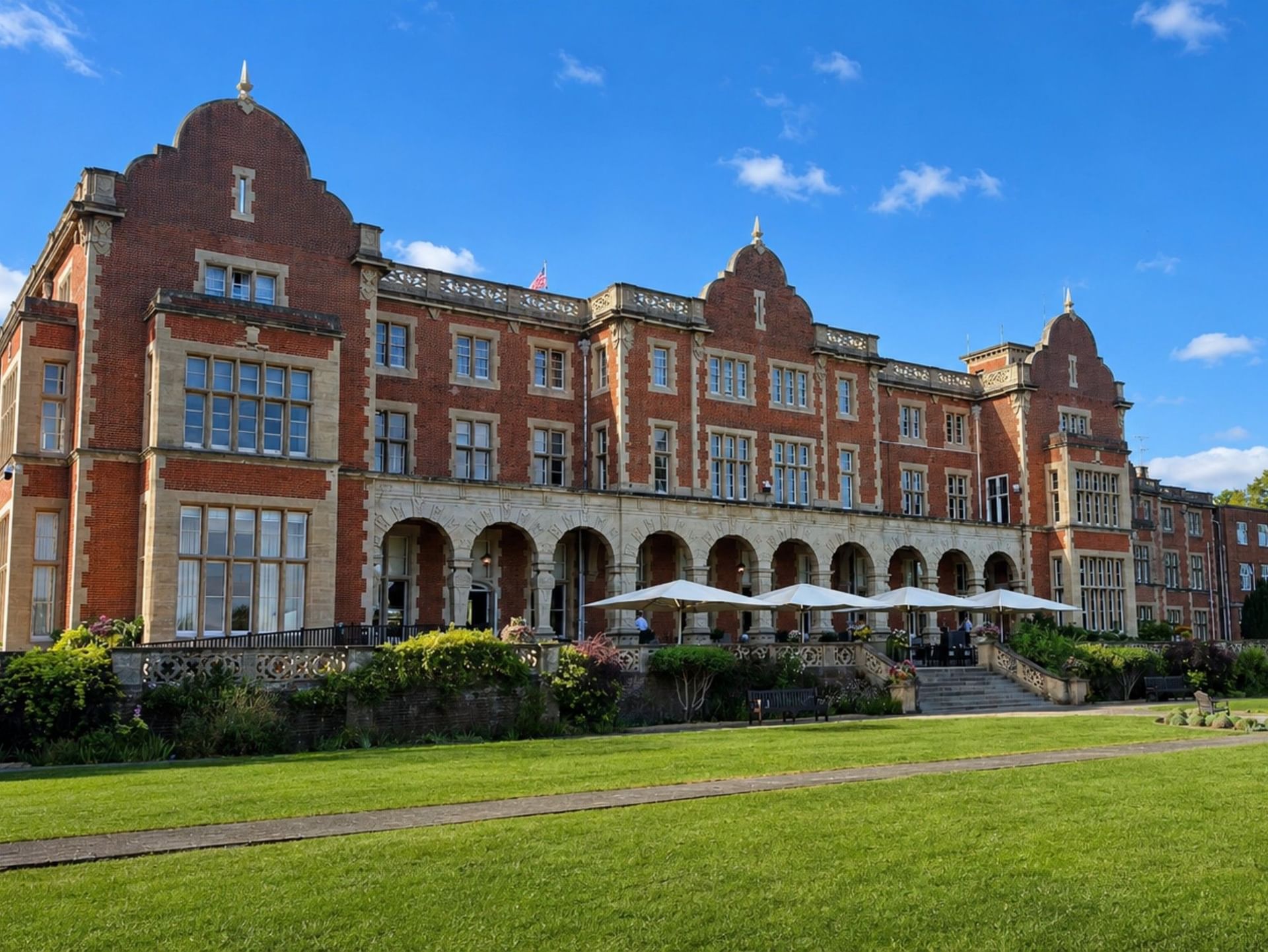
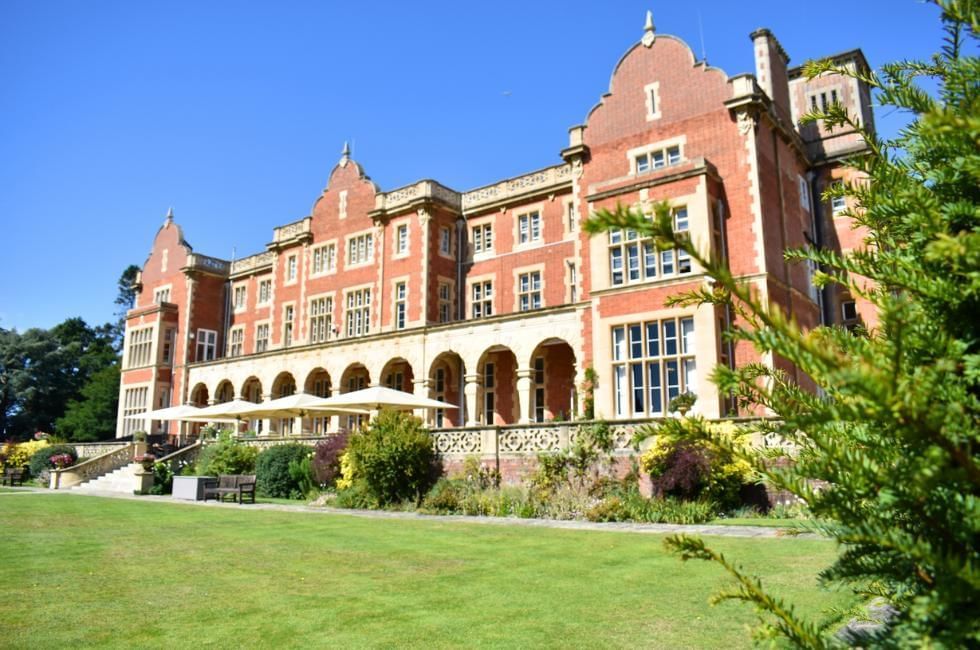
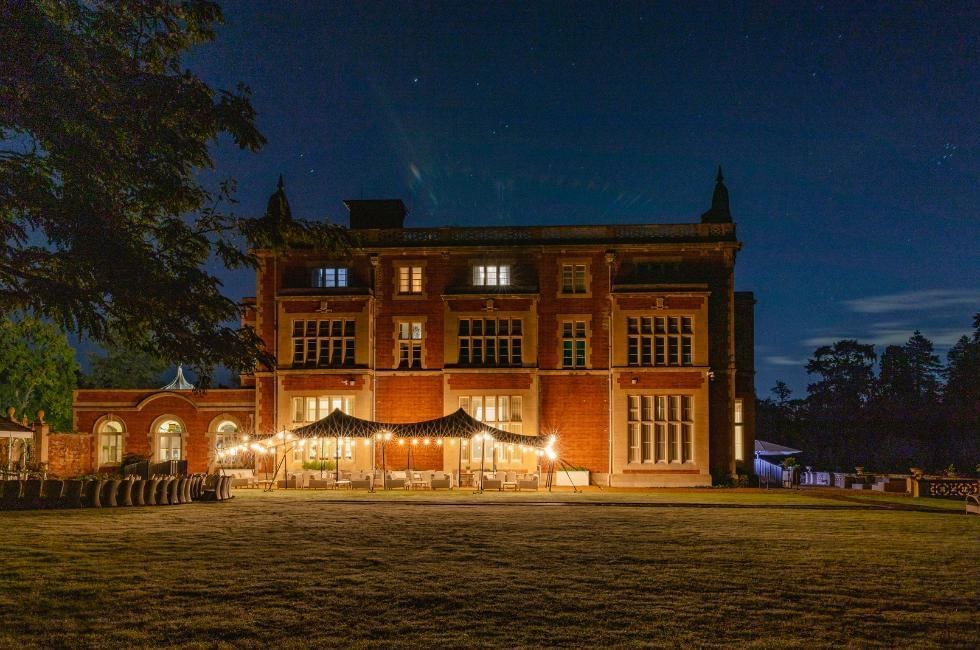
The Easthampstead Park mansion standing today was built during the 19th century for Arthur Hill, the 4th Marquess of Downshire.
The earlier house was demolished in 1860, and the new mansion was constructed in its place.
Historic England dates the present building to 1860 and describes it as a large Jacobean style country house built in red brick with Bath stone dressings.
Local heritage material gives the construction period as approximately 1860 to 1864.
The 4th Marquess was closely connected with Easthampstead.
His English residence was the estate, and he was appointed a Deputy Lieutenant of Berkshire in 1852.
He also oversaw the rebuilding of the local Easthampstead church during the 1860s.
The Victorian mansion replaced the earlier Trumbull house but retained the estate's long association with the Trumbull and Downshire families.
One surviving part of the earlier complex is the historic stable block, which remains close to the golf course.
Easthampstead Park in the Victorian and Edwardian Era
The Downshires continued to live at Easthampstead Park after the new mansion was built.
The estate became particularly associated with the 6th Marquess of Downshire, Arthur Hill, who lived principally at Easthampstead Park.
His period at the estate is remembered as one of its most active and prosperous eras.
The estate had a large staff, extensive gardens and grounds, and even its own miniature steam railway.
The 6th Marquess took a personal interest in the running of the estate and its upkeep.
Easthampstead Park also had connections with Royal Ascot, when the estate became a focus for entertaining and social activity.
In 1885, the future King Edward VII, then Prince of Wales, visited Easthampstead Park.
A letter written by him from the Park that year provides a surviving documentary connection to the visit.
The 6th Marquess died at Easthampstead Park in 1918.
His son, Arthur Hill, became the 7th Marquess of Downshire.
The family continued to own Easthampstead Park until after the Second World War.
Easthampstead Park During the Second World War
The estate's role changed dramatically during the Second World War.
St Paul's School in Hammersmith was evacuated from London to Easthampstead Park.
The school operated from the mansion while pupils and staff were accommodated largely in Crowthorne, with Wellington College providing additional facilities including playing fields and laboratories.
The school's own historical archive confirms its wartime evacuation to Easthampstead Park.
The Army also occupied parts of the estate and constructed temporary buildings in the grounds.
The wartime presence brought the estate into direct contact with the conflict.
In 1941, German aircraft attacked the area and bombs fell along the main drive.
One struck the lodge at the entrance to the estate.
By the end of the war, the centuries old role of Easthampstead Park as a private aristocratic estate was coming to an end.
The 1947 Fire
After the war, Easthampstead Park was sold to Berkshire County Council.
In May 1947, the mansion suffered a major fire which destroyed much of the roof.
The building was subsequently repaired and adapted for a completely new purpose.
Historic records and later architectural assessments confirm that the fire fundamentally changed the appearance of the building, including the loss of its original pitched roofs.
The mansion that stands today therefore combines its original Victorian structure with changes made following the fire and during its later institutional use.
From Country House to Teacher Training College
After the fire, Easthampstead Park was converted into a teacher training college.
The building was altered and extended to accommodate its new role, marking the beginning of a period when Easthampstead Park became a place of education rather than a private country residence.
In 1968, Easthampstead Park College was amalgamated with Bulmershe College to form the Berkshire College of Education.
The teacher training function eventually came to an end in 1972.
The estate then became an adult residential education centre alongside Easthampstead Park School.
This educational chapter lasted for decades and left its own mark on the building.
Several rooms and spaces within the mansion still reflect the property's connection with the college and its former residents.
From Education Centre to Events Venue
As the educational use changed, Easthampstead Park gradually developed into a conference and events centre.
Easthampstead Park School eventually moved to new premises in the 1990s, allowing the mansion to focus increasingly on conferences, meetings and events.
The property's long association with gatherings and hospitality therefore predates its current life as a hotel.
The conference and events use developed from the site's decades of educational and residential use.
Easthampstead Park Today
In 2018, Bracknell Forest Council sold Easthampstead Park Conference Centre to Active Hospitality.
The new owners announced plans for a substantial investment to transform the Grade II listed mansion into a modern hotel while retaining its character and continuing its role as a venue for weddings, meetings and events.
The development brought new bedrooms, refreshed public spaces, meeting facilities, dining areas and leisure facilities to the estate.
Today, Easthampstead Park combines its Victorian heritage with modern hospitality.
The Grade II listed mansion remains at the centre of the estate, surrounded by parkland and spaces used for weddings, celebrations, meetings, dining and overnight stays.
From a medieval royal hunting landscape to the home of the Trumbull family, the country seat of the Marquesses of Downshire, a wartime school, teacher training college and conference centre, Easthampstead Park has continually adapted to the needs of each generation.
Its history is not simply the story of one house.
It's the story of an estate that has changed hands, changed purpose and changed with the times, while remaining an important part of the local landscape.